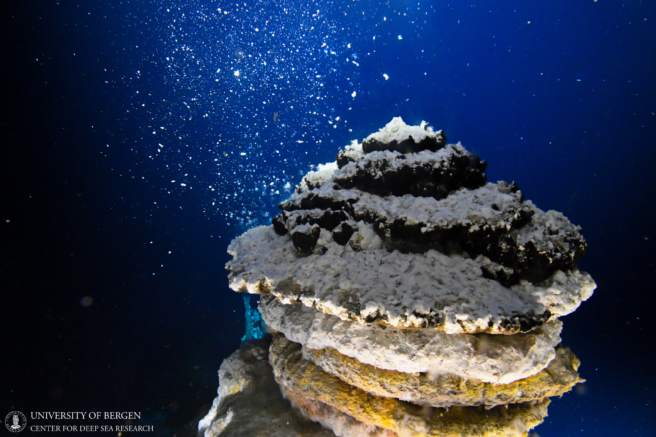
Norway´s decision to open for deep seabed mining activities within their own jurisdiction in 2024 made the headlines all over the world. Scientists, the environmental movement, a number of states and the EU warned Norway of the potential consequences of deep seabed mining activities on the environment and on fisheries.
WWF Norway took the decision to court, arguing that the decision to open areas for deep seabed mining was made with insufficient knowledge, and without a sufficient strategic environmental impact assessment (SEA). The District Court ruled against WWF Norway, and WWF Norway has appealed the verdict. The Appeals Court has now decided to lift key questions to the EFTA Court. Attorney Jenny Sandvig, partner at the Norwegian law firm Simonsen Vogt Wiig, is legal counsel.
The Norwegian Borgarting Court of Appeal has decided to refer WWF Norway’s lawsuit against the Norwegian state to the EFTA Court for an advisory opinion on whether Norway has violated the European Economic Area Agreement (EEA), an agreement allowing non-EU countries access to EU internal markets. The case concerns the Norwegian government’s decision to open areas for deep seabed mining and how the EEA agreement should be interpreted in this context.
The European Free Trade Association (EFTA) consists of Iceland, Liechtenstein, Norway and Switzerland. The EFTA Court fulfils the judicial function within the EFTA system, interpreting the EEA Agreement, which grants EFTA states access to EU’s single market.
The SEA directive has been integrated into Norwegian law through the EEA agreement, and requires states to conduct thorough impact assessments to identify potential risks and impacts from implementing a plan. It is these requirements the Borgarting Appeals Court in Norway has requested the EFTA court to provide an Advisory opinion on.
Other recent submissions have already proved important for the interpretation of WWF Norway’s deep seabed mining lawsuit. One recent advisory opinion established a duty to repair the damages from a decision taken on the basis of an insufficient or otherwise incomplete impact assessment, regardless of whether the contents of the assessment impacted the decision.
Another EFTA advisory opinion related to the geographical reach of the EEA agreement. The Norwegian government has historically claimed that the Norwegian Continental Shelf is not part of the EEA Agreement, and that the agreement does not apply to the area opened for deep seabed mining. In February the EFTA court established that the Norwegian Continental Shelf indeed is part of the agreement, and thus that Norway may not exempt certain plans from complying with the agreement. The Norwegian government has requested the Norwegian supreme court to rule against the Advisory opinion from the EFTA Court.
“The Strategic Environmental Assessment is a crucial safeguard for nature. It is the only stage where environmental impacts and risks can be assessed in a broad and systematic way. When assessments are based on assumptions or exclude important impacts, it can have serious consequences,” says Karoline Andaur, Secretary General of WWF Norway.
The Borgarting Court of Appeal has asked the EFTA Court for an advisory opinion on whether certain effects may be omitted from the impact assessment, and under which conditions they may be exempt. Specifically, the court is asked to advise on whether excluding on shore effects from opening for deep seabed mining should have been assessed. The opinion is not legally binding, but will serve as important guidance for the Norwegian Court of Appeals.
“We are pleased that the Court of Appeals has asked the EFTA Court to clarify. This clarification will be of significance far beyond this case”, says Karoline Andaur.
WWF emphasizes that the lawsuit against the state is not about a general yes or no to deep seabed mining, but about what legal requirements relating to knowledge and environmental impact assessments must be met before such decisions can be made. The EFTA Court’s opinion may provide important guidance both for the further handling of the case in question, and for future administrative decisions.
The case has been referred to the EFTA Court, but a date for the hearing has not yet been set.
For media requests to WWF Norway, consult this page.
Spokesperson for Simonsen Vogt Wiig is attorney Jenny Sandvig, jesa@svw.no.